
The Essentials of Value-Based Health Care
It is both very simple & very complex. Chapter 3 of my ‘Tango For Five in Health Care’ is all about how the transition from a fragmented fee-for-service to a more prosperous value-based system of health will heal our systems.
So, before you get to the book, here a short overview of the essentials:
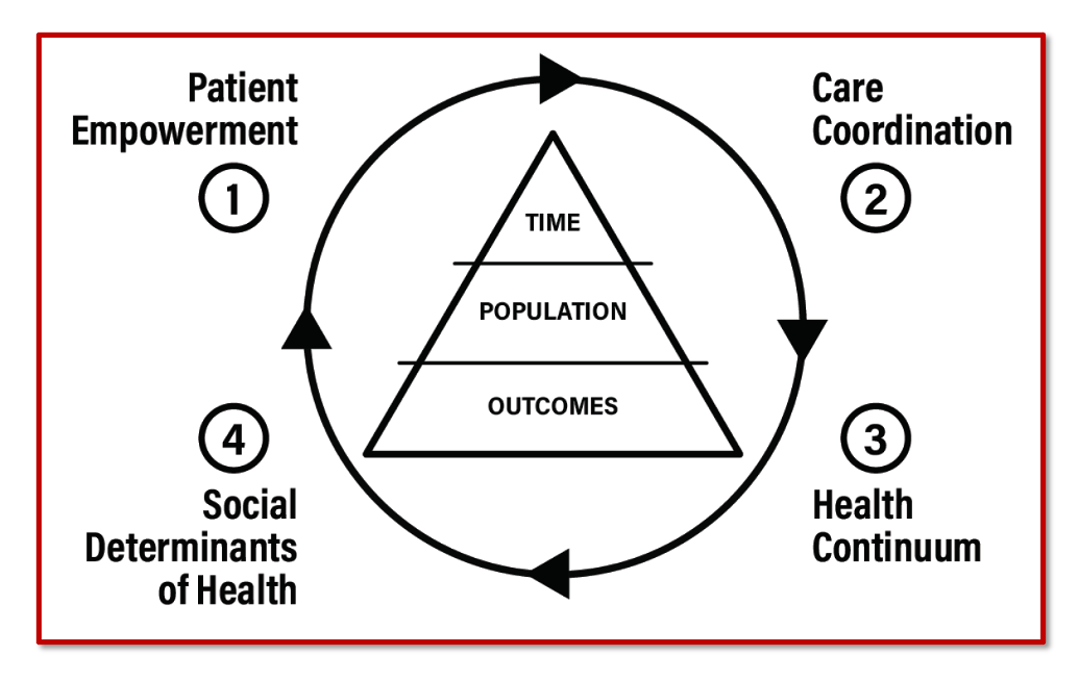
- Simple, because VBHC is all about patient focus and generating care, solutions & results that matter to patients. How we do this? By measuring outcomes that are relevant for patients’ health & wellbeing, measuring these in a group of patients with the same needs (‘population’) and define a timeframe (for example within a year) in which all actors will be rewarded if these outcomes are met (doctors, insurers, hospitals, patients etc).
- Complex, because all actors – providers, payers, patients, policy & pharma – have to agree on these outcomes and because the capturing & analyzing of these outcomes data is highly complex and requires interoperable digital systems of health.
So, if we continue to use pen & paper and if actors stay stuck in silos, not talking to each other, we will never figure out a way how to improve patient care and decrease the cost in our breaking systems.
“The Whole is more than the Sum of its Parts” said Aristotle. In Health Care, this means that patients – providers – pharma – payers – policymakers hold the holy grail themselves to increase the value pie once they start working together. Today, we are suffering from redundancies, repetition & unnecessary care that are driving cost & inefficiencies. In an earlier blog, I spoke about Waste and that up to 50% our of our health care dollar spent is wasted. Picture this: in the US, health care is the largest industry with 20% of GDP, equaling over 4 trillion dollars (!). Other countries are not much different. Why? Because actors don’t communicate across silos. They repeat tests, exams & treatments as patients navigate this hypercomplex ecosystem, they develop drugs & new therapies outside of unmet need conditions and so on. Hospitals, doctors, pharmacists, support staff, caregivers & nurses all suffer from legacy infrastructures and a lack of compatible IT systems. Furthermore, federalistic countries such as Germany, Switzerland & the US have delegated the ownership of health care to their states, Bundesländer & cantons, adding further to risks of fragmentation, nuisance of the patient experience & cost to our systems. This is a vicious downward circle that I am describing in much detail in chapter 1 of my book.
So – NOW – WHAT DO WE DO ?
The Digital Transformation – coupled with the transformation from a Fee-For-Service to a Value-Based Health Care system hold the holy grail to lead us out of this quandary.
If we adopt these strategic priorities together with the 3 layer pyramid of value-based health care, this can be done as outlined in the figure above:
- Empower patients to become pro-active members of the care coordination team.
- Focus on preventing as much as we do on fixing health and align our incentive structure accordingly.
- Lastly, include not only clinical, medical & pharmacological but also social determinants of health, which actually account for over 80% of elements that positively impact our health. I’ll talk about this more in my next blog.
Meanwhile, I invite you to send & write your thoughts and experiences into the comment section below.
Recent Comments